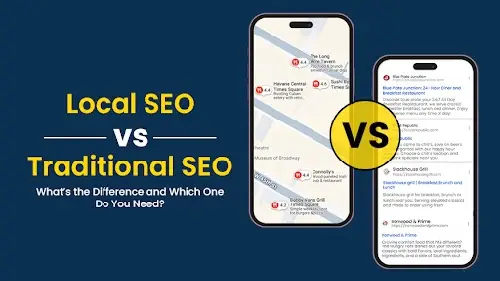
Every small business wants one thing — visibility. Whether you run a café in London, a salon in Manchester, or a digital agency in Dubai, being found on Google is essential to attract customers. But when it comes to SEO, business owners often face a big question:
Should I focus on Local SEO or Traditional SEO?
Let’s break down both approaches and discover which one drives better results for small businesses.
What Is Traditional SEO?
Traditional SEO focuses on improving a website’s visibility on a global or national scale. It’s ideal for businesses that don’t depend on local customers — like eCommerce stores, software companies, or online service providers.
It involves:
- Keyword research for high-volume, competitive terms
- Link building from authority websites
- Optimising on-page elements like titles, meta tags, and headings
- Publishing long-form content to rank across industries
For example, if you sell online fitness equipment, Traditional SEO helps you reach customers nationwide rather than just in your city.
What Is Local SEO?
Local SEO focuses on improving visibility within a specific geographic area. It’s designed for small businesses that rely on foot traffic or local leads — such as restaurants, plumbers, clinics, or salons.
It helps your business appear in:
- Google Maps results
- The “Local 3-Pack” (the top three map listings)
- Local search queries like “plumber near me” or “best café in London”
Key components of Local SEO include:
- Google Business Profile optimisation
- Local citations (directories like Yelp, Yell, or Bing Places)
- Customer reviews and ratings
- Location-based keywords
In short, Local SEO connects you with nearby customers who are ready to buy now.
Local SEO vs. Traditional SEO: The Core Differences
| Feature | Local SEO | Traditional SEO |
|---|---|---|
| Target Audience | Local customers in a specific region | National or global audience |
| Focus Keywords | “Near me” or location-based keywords | Broad, industry-based keywords |
| Tools Used | Google Business Profile, local directories | On-page SEO, backlinks, content marketing |
| Conversion Type | Calls, store visits, local inquiries | Online purchases, form fills |
| Competition Level | Lower (local area only) | High (national/global) |
Which Works Best for Small Businesses?
For small businesses, Local SEO delivers faster and more measurable results.
Here’s why:
- You face less competition compared to global markets.
- Customers searching locally often have high purchase intent.
- Google prioritises location-based searches for nearby users.
Example:
A bakery in Birmingham that optimises its Google Business Profile and collects local reviews will appear when someone searches “best cakes near me.” That’s a ready-to-buy customer you can convert instantly.
On the other hand, Traditional SEO is ideal for businesses aiming to expand regionally or sell products online without geographical limits.
How to Combine Both for Maximum Results
The best strategy? Use both Local SEO and Traditional SEO together.
Here’s how:
- Use Traditional SEO to build your website authority and rank for general keywords.
- Use Local SEO to appear in Google Maps and local searches.
- Add location-based content (e.g., “SEO agency in London”) to attract nearby traffic.
This combination ensures your business ranks locally while building long-term national visibility.
Final Thoughts
When it comes to Local SEO vs. Traditional SEO, the winner for small businesses is clear — Local SEO delivers faster leads, higher conversions, and better ROI.
By optimising your Google Business Profile, collecting reviews, and targeting local keywords, you can dominate your area and grow consistently.
Ready to get started?
Book your free Local SEO Audit today and see how your business can appear at the top of Google Maps and local searches in just weeks.